Demo launched on Steam
The Demo page lists it as a free playable version for Windows and macOS, with the short description placing the action inside a mobile bomb workshop.
3-player bomb defusal / multilingual guide
One monkey cannot see but must operate the bomb, one cannot speak but owns the manual, and one cannot hear but has to translate the chaos. This hub turns official intel, Demo details and beginner workflows into a practical first-run guide.
Guide Library
This site is organized like a player manual: Demo setup, co-op flow, beginner route, controls, roles, module calls and tools all have their own pages.
Set up a three-player lobby, test voice restrictions and assign the first roles before the timer starts.
DemoUse the Demo as your training room for platform checks, microphone setup and first-session practice.
BeginnerLearn the safe loop: observe, check the manual, repeat the action, execute once and stop.
ControlsFix input focus, microphone permissions and Steam voice settings before a live run.
PracticeTurn failed runs into one clear team rule instead of guessing what went wrong.
ModulesUse stable switch numbers, direction words, state checks and Enter timing.
RolesCompare who can see, speak, hear, read rules and touch the bomb.
ToolsOpen quick references for signals, module routing, lobby checks and debriefs.
Latest Intel
The Demo page lists it as a free playable version for Windows and macOS, with the short description placing the action inside a mobile bomb workshop.
The official game page marks BOMBANANA! as Coming Soon with an August 2026 date. Details may still change before launch.
First Run
BOMBANANA! is hard because information never belongs to one person. Spending the first minute on shared language beats guessing a button.
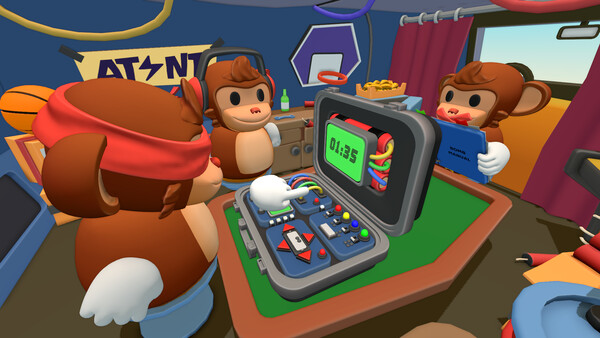
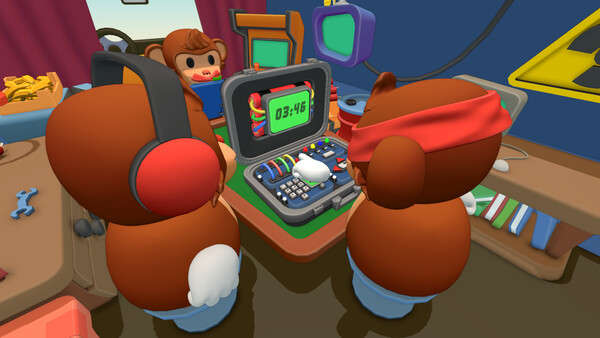
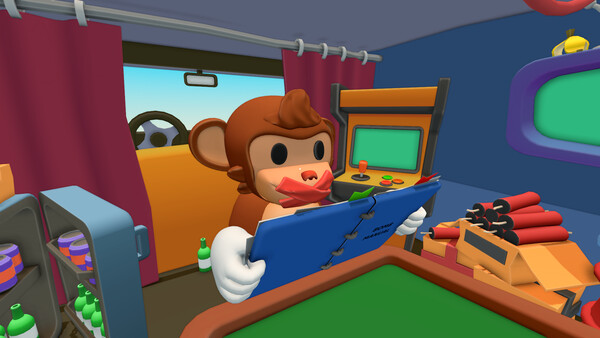
The deaf monkey can see the bomb and the mute monkey, then speak to the blind monkey. The blind monkey can only feel and operate. The mute monkey has the manual but cannot speak.
Have the deaf monkey split the bomb into positions: upper-left, upper-right, lower-left, lower-right and center. Movement commands to the blind monkey should stay short.
“How many red parts?” is easier to answer with gestures than “How do we solve this?” Questions should map to numbers, directions, colors or yes/no.
Before the deaf monkey gives an operation command, repeat the module, location, target and action. The blind monkey acts only after the agreed confirmation word.
Player Tools
Use this as a compact desk card before you queue: install the Demo, lock the three roles, agree on signals, then route every module through one clear question.
DEMO
ROLES
Every call should move information in one direction: observation, manual check, confirmed action.
MODULES
The translator role should ask for one missing fact, wait for one answer, then turn it into one safe operation.
FIX
Make the default answer “wait” until Mute sends YES and Deaf says the execute word.
If a gesture becomes unclear, stop the round flow and redefine it before touching another module.
Finish the active panel first. Previewing future modules while Blind is still operating creates stale commands.
Spend one minute testing voice, emotes and role limits before the timer starts.
Team Drills
The official page leaves the communication method to your team. Use these short drills before a timed bomb so every signal has one meaning and every action has a confirmation.
0160 SEC
02CODEBOOK
Choose any clear body motion available in your session, but never change its meaning during a round.
03ACT GATE
This adapts the check-back pattern to BOMBANANA!'s restricted channels: the player who sends an instruction should not be the only person deciding that it was understood.
Call: Deaf says one location, one target and one action.
Repeat: Blind repeats the complete instruction aloud without touching the bomb.
Verify: Mute hears the repeat and shows YES or STOP where Deaf can see it.
Act: Deaf says the agreed execute word; Blind performs one action and stops.
Example: “Upper-left, second control, hold.” / “Upper-left, second control, hold.” / YES / “Execute.”
0460 SEC
After a failed bomb, spend one minute finding the first broken link. Short, specific debriefs turn a loss into the next team's practice target.
Change one habit at a time. Do not invent a permanent module rule from one failed attempt.
Crew Roles
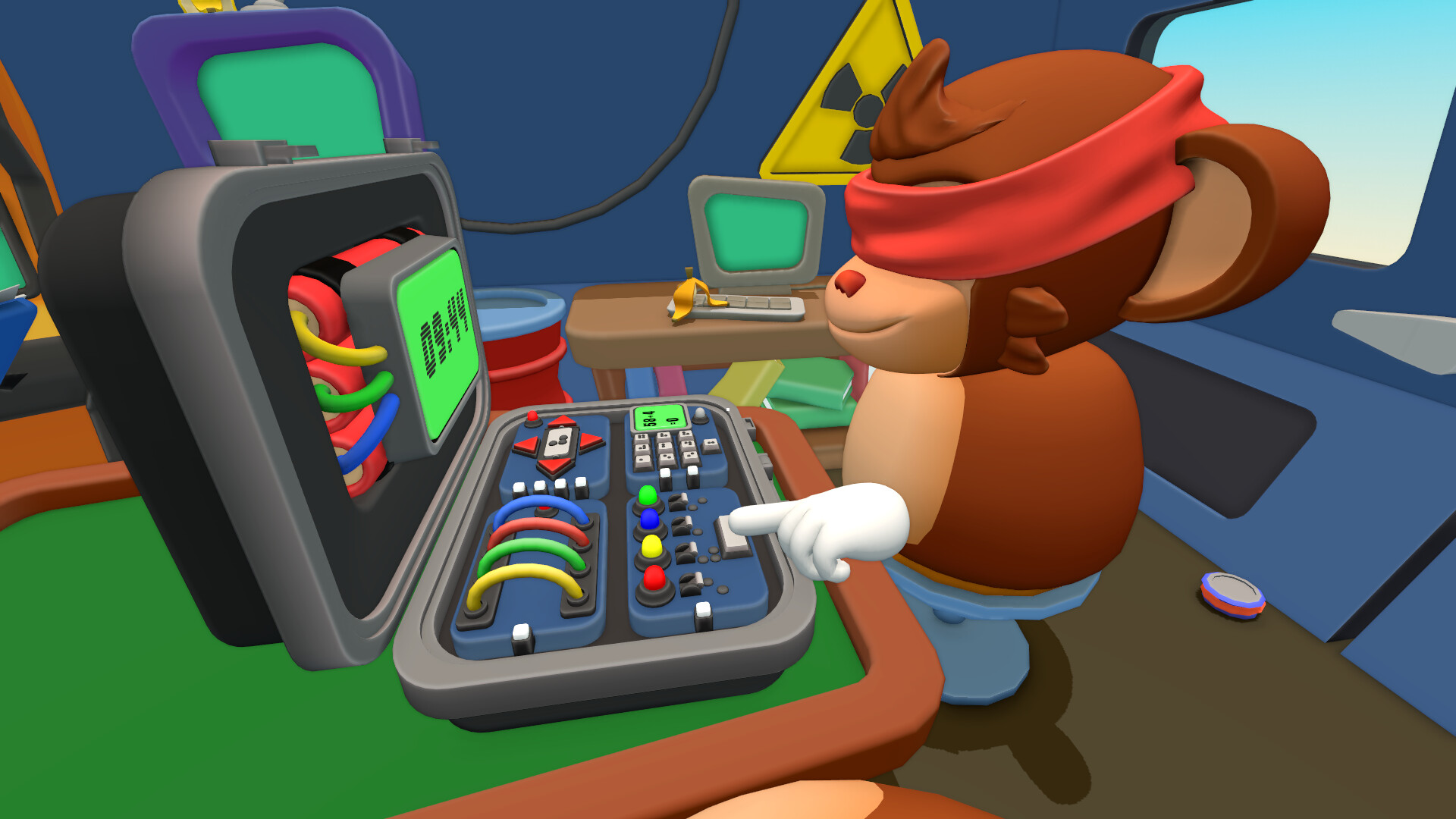
Feel the bomb, press buttons and move parts. Do not guess colors or text; describe touch, shape, position and feedback precisely.
Read the defusal rules and convert answers into gestures. Agree on signs for numbers, colors, directions, no and danger before the timer gets loud.
You can see the bomb and the mute monkey, and you can speak to the blind monkey. Turn rules into questions, then answers into executable commands.
Module Calls
Rules change between modules, but strong callouts often look the same. Keep these sentence patterns in your voice channel or team notes.
“Upper-left module, five wires from top to bottom: yellow, blue, red, black, white. Any flashing light?”
If the mute monkey needs more conditions, ask for total count, repeated colors, special marks and endpoints. The blind monkey should only hear the final cut instruction.
“Center module, one round blue button, says HOLD, two light slots beside it.”
Buttons are dangerous when “tap” and “hold” get mixed up. Use fixed verbs: tap, hold, release and wait for color.
“Lower-right four tiles: hollow star, curved hook, double vertical lines, symbol like a 3. Need manual order.”
Avoid poetic names for symbols. Use visible features, relative position, hollow/filled state and dots to reduce interpretation cost.
Visual Reference
Official screenshots show the van workshop, bomb panels and multiplayer viewpoints, so players see the real game rather than unrelated stock art.
Before You Play
Steam lists the Demo release date as June 15, 2026. It is free to play and supports online co-op.
Windows 10/11 64-bit, Intel Core i3-6100 or AMD Ryzen 3 1200, 2 GB RAM and 300 MB storage.
The official listing includes English, Simplified Chinese, Japanese, Korean, French, German, Spanish, Turkish and more.
FAQ
It is also a co-op bomb-defusal game, but the twist is that all three players have sensory or communication limits. The official page says the game does not impose one communication method; your team has to build one.
The official feature list says “3-Player Co-op - No more, no less,” so plan around a fixed three-person team.
Practice handoff: the deaf monkey asks, the mute monkey answers with signs, and the blind monkey repeats before acting. Chase speed only after the chain is stable.
Sources
This page is an original multilingual summary. Gameplay facts prioritize the official Steam pages; the practice drills adapt established closed-loop communication and debrief methods.